The Chart Room · Navigation
Running the Inlet
Coming home over the bar without stuffing the bow, finding the sand, or scaring your crew.
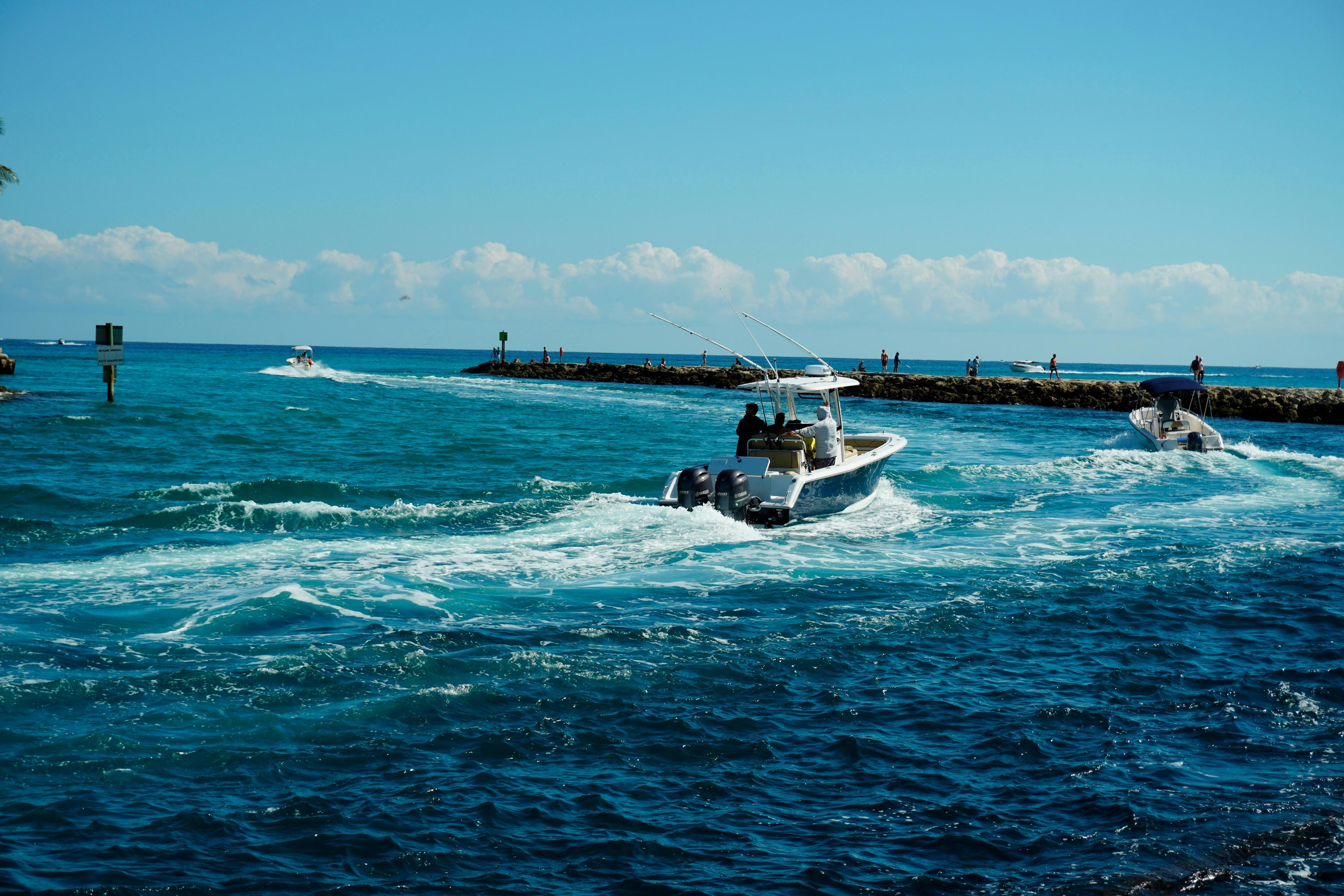
The ride out is easy. You're fresh, the sun's coming up, and the inlet usually lies down at dawn. The ride home is different. You're tired, the tide may have turned against you, the afternoon wind has stacked up a swell, and everybody on board wants to be back at the dock. That's when inlets bite.
Every inlet on this coast is different, and the ones that matter most (Oregon, Hatteras, Ocracoke, Beaufort, Masonboro, the jetties down south) change from season to season. These are the habits that apply to all of them.
Before you leave the dock
Most bad inlet runs are decided hours earlier. Know what the water will be doing at the time you plan to come back, not the time you leave.
- Tide and current: look up the predicted current for your inlet, not just high and low tide. Slack water and the current can lag the tide chart by an hour or more inside an inlet.
- Wind against tide: an outgoing (ebb) current running into an onshore wind or swell stands the waves up short and steep right on the bar. If the ebb is strong when you're due back, plan around it.
- Wave height and period: check the nearest offshore buoy. Short period (about 7 seconds or less) means tight, choppy wind waves. Long period (10 seconds and up) means fewer, bigger waves with more power, and they can break on a bar that looked calm an hour ago.
- Recent changes: inlet channels shoal and move. Check the Coast Guard's Local Notice to Mariners and any recent channel surveys, and ask at the marina or tackle shop. Buoys get moved to follow the channel; your chartplotter's old track may run straight over new sand.
- A backup: know the next inlet up or down the coast, and how much fuel it takes to get there.
Pick your time
The easiest time to come in is on the incoming tide, ideally the last of the flood into high slack. The current is running the same direction as the swell, the waves lengthen out, and there's the most water over the bar. The hardest time is the middle of a strong ebb with any swell running. If you can, time the end of your trip so you arrive on the flood. Waiting an hour outside beats a bad hour in the inlet.
If you have to ask whether it's runnable, wait for the flood.
Stage outside the break
Don't run straight in from offshore at cruise. Slow down well outside where the waves start to stack up, and sit there for a few minutes. Watch the bar the way you'd watch a surf break.
- Waves come in sets. Count them. You'll usually see a few bigger waves, then a lull. You want to go in at the start of the lull, right behind the last big wave of a set.
- Find the channel by the markers, not by memory. Red markers stay on your right coming in from sea (red, right, returning).
- Look for where the waves break. Breaking water on either side of the channel is the shoal. A wave that breaks clear across the channel means the bar is closed out; that's a no-go, not a challenge.
- Watch other boats come through. Where they slow, where they surf, where they get pushed around. That's free local knowledge.
Read the water
Deeper water is darker and the waves roll through it without breaking. Shallow sand shows as lighter green or tan water, waves that peak up and break early, or a line of white water where nothing else is breaking. Boils, standing waves and lines of foam or debris mark where current is running hard or two currents meet. Stay in the dark, smooth, unbroken lane between the markers, even if it isn't the straight line home.
Ride the back of a wave
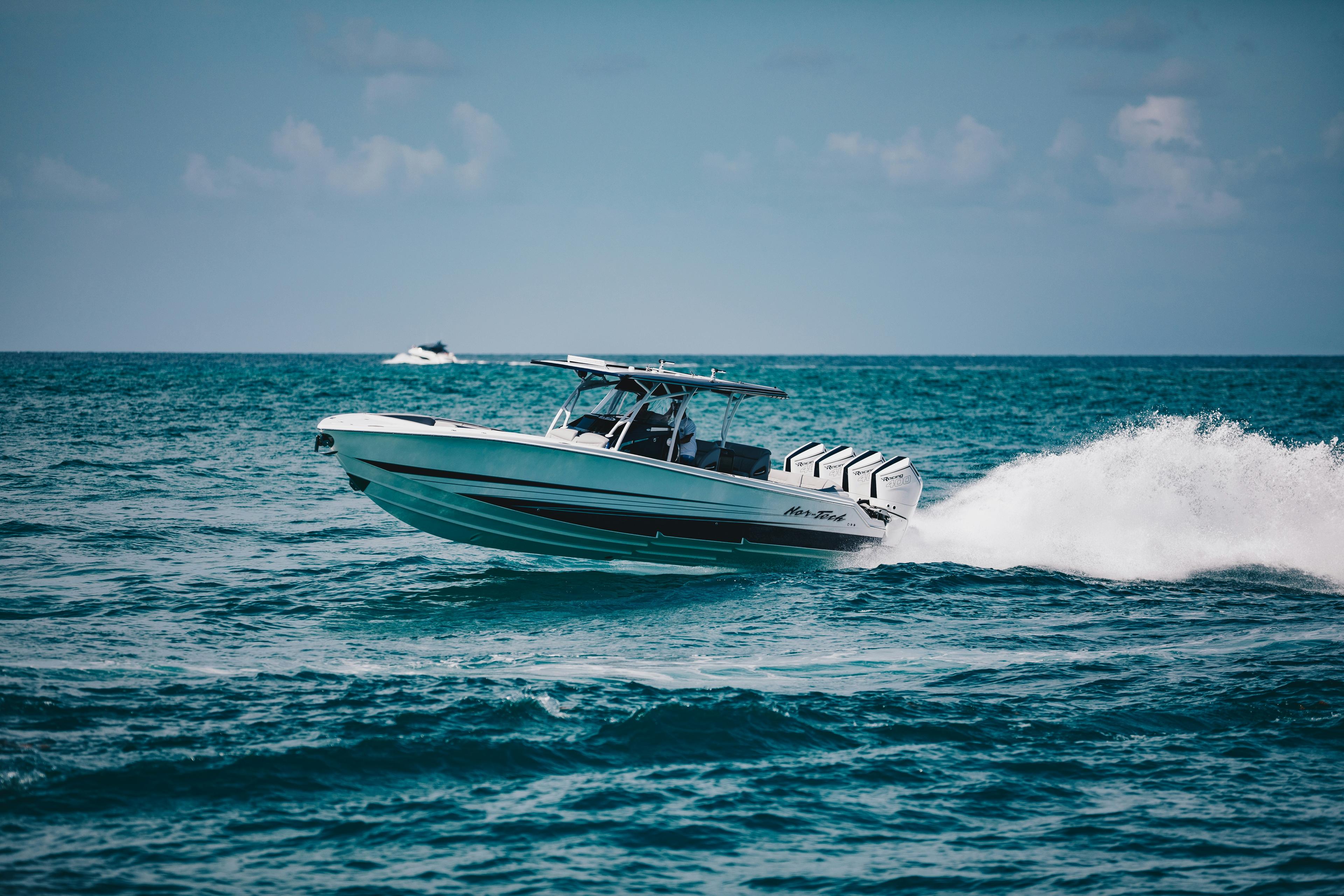
The goal coming in is simple: pick a wave, get up onto its back, and stay there all the way through the bar. The wave ahead of you does the work of carrying you in, and the one behind you never catches up.
- Let the last big wave of the set pass under you, then power up and settle in on its back side, a little behind the crest.
- Match its speed with the throttle. If you start climbing up and over the crest, back off. If you start falling back toward the next wave, add power.
- Don't pass the wave you're riding. Going over the top and down its face is how you end up driving the bow into the back of the wave in front.
- Use the throttle more than the wheel. Small, steady corrections keep you lined up; big wheel moves in a following sea invite the stern to swing.
How to keep from stuffing the bow
Stuffing happens when the boat runs down the face of a wave, the bow drops into the trough, and the back of the next wave buries it. Water comes over the bow, the boat slows hard, and the wave behind you can catch the stern. To prevent it:
- Stay on the back of your wave, never on its face.
- Trim the bow up a little (trim out) so it rides high instead of digging in. Don't run trimmed all the way down coming in.
- Keep weight aft. Get people and heavy coolers back toward the console and stern; nobody rides on the bow.
- Don't chop the throttle at the top of a wave. Slow down before you get there, and keep enough power on to stay in control.
The other danger in a following sea is broaching: the stern gets pushed sideways, the boat turns beam-to, and the next wave hits you on the side. Keep the stern square to the waves, keep power on, and correct early. On twins, small throttle differences steer better than the wheel.
Take care of your riders
A good inlet run should feel boring to the people on board. Brief them before you get to the bar, not in the middle of it.
- Everyone sits down, aft of the console, knees soft, with a hand on something solid. Nobody standing, nobody on the bow.
- Life jackets on for kids (it's the law for children on a moving boat in most states) and for anybody who isn't a strong swimmer. Easier: everyone, for the inlet.
- Engine cut-off lanyard clipped to the driver. It's required on most boats under 26 feet when you're on plane.
- Stow rods, latch the cooler, and get anything loose off the deck before you start in.
- Call it out: "hold on, big one behind us" is better than a surprise.
When to wait, or go somewhere else
If waves are breaking across the whole channel, if the ebb is ripping against a building swell, or if visibility is going, don't commit. Wait outside for the tide to turn, or run to the next inlet. Turning around inside a breaking inlet is the most dangerous move there is; if you have to bail, do it in a lull, turn quickly with power, and head straight back out through the waves bow-first. Keep the VHF on channel 16, and don't hesitate to call the Coast Guard or your towing service before it becomes an emergency.
Get home, wash the boat down, and tell your crew it was easy. That's the job.
This is general guidance, not a substitute for local knowledge, current charts or training. Every inlet is different and changes over time. Check NOAA tide and current predictions, NOAA buoy data, the National Weather Service marine forecast and the Coast Guard Local Notice to Mariners before you go, and take a boating safety course through the U.S. Coast Guard Auxiliary or America's Boating Club. Know your boat, and when in doubt, wait it out.